
Substantial Maize Grinding Machine: Revolutionizing Grain Milling for Optimal Productivity
2026-06-18
Picture a maize grinding machine so robust it doesn’t just mill—it redefines what optimal productivity means on your grain processing floor. As demands for higher throughput collide with tight margins, the substantial maize grinding machine steps into the spotlight, and PINGLE is engineering solutions that leave conventional methods in the dust. Here’s why this revolution in grain milling is capturing attention—and how it might change everything for you.
Engineering Breakthroughs in High-Capacity Maize Processing
Modern high-capacity maize processing has evolved far beyond traditional milling, driven by engineering leaps that tackle bottlenecks in throughput and efficiency. Instead of simply scaling up old systems, innovators have redesigned core unit operations from the ground up. For instance, air-jet sieving and turbo separators now handle massive volumes with precision, cutting downtime while preserving kernel integrity. These aren’t cosmetic upgrades; they represent a fundamental rethinking of material flow, where every component is optimized for continuous, high-load operation without sacrificing the quality of starches, proteins, or germ.
One standout advancement lies in the integration of smart sensors and adaptive process control. Rather than relying on fixed recipes, dynamic adjustment systems read moisture, density, and particle size in real time, then tweak rotor speeds and steeping conditions on the fly. This closed-loop approach slashes energy waste and keeps extraction rates above 98% even during peak demand. Complementing this, modular hulling and degermination units—designed with wear-resistant ceramic coatings—extend maintenance intervals dramatically, turning what used to be monthly shutdowns into quarterly ones. Such reliability is a quiet revolution in an industry where uptime directly dictates profitability.
The ripple effect of these breakthroughs goes well beyond the factory floor. By squeezing more value from each kernel, processors now generate less waste, redirecting fiber-rich fractions into bio-based packaging or animal feed instead of landfills. Capital costs per ton of capacity have dropped as equipment footprints shrink, making high-tech maize plants viable in regions previously limited by infrastructure. It’s a shift that marries productivity with resource stewardship, proving that engineering ingenuity can transform a commodity crop into a versatile, nearly zero-loss industrial resource.
From Kernel to Flour: Precision Grinding Redefined
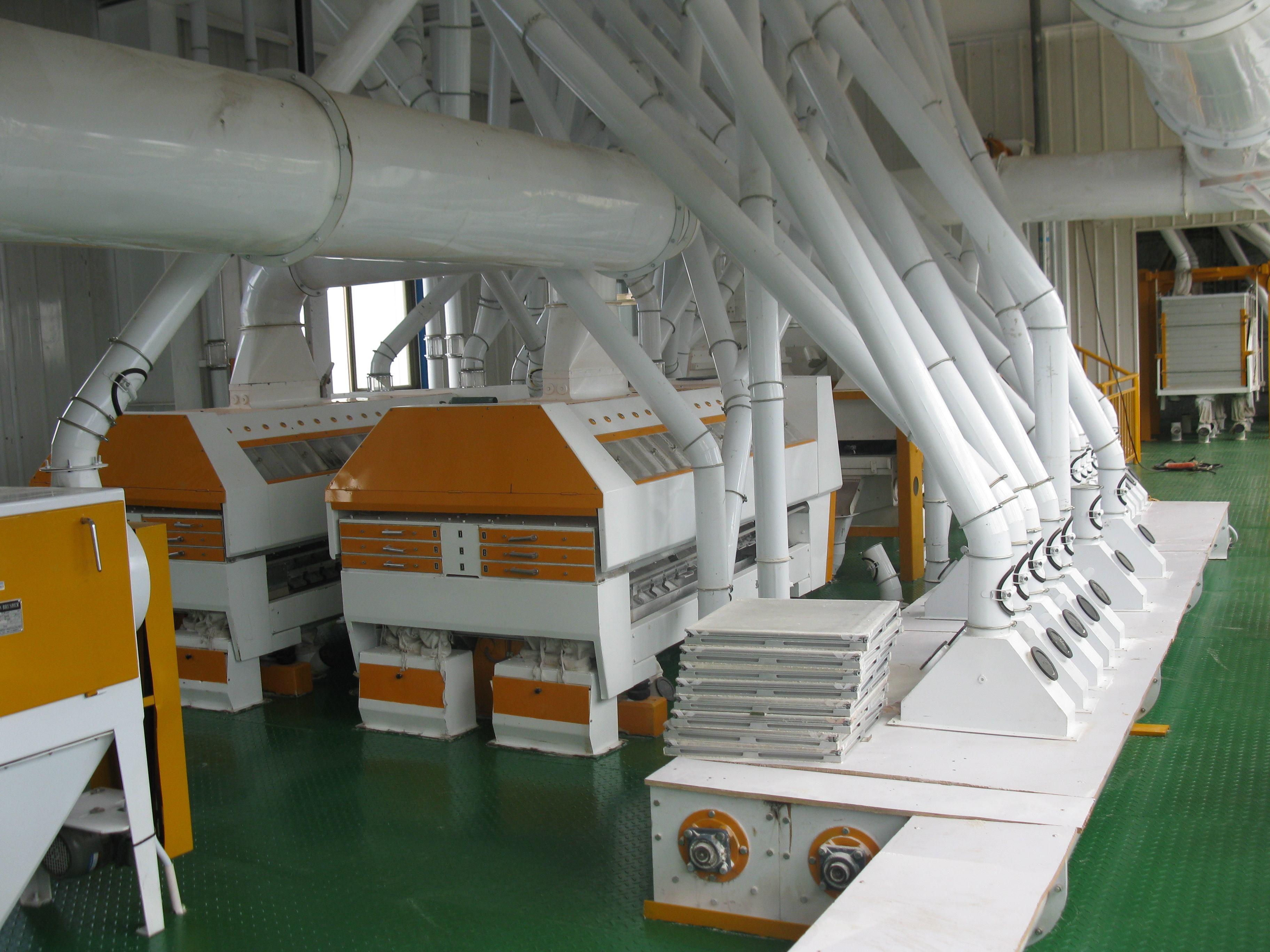
The transformation of a humble grain into silky, consistent flour has always hinged on one critical step: grinding. Modern precision engineering has utterly reshaped this ancient process. It’s no longer about simply pulverizing the kernel; it’s about controlling temperature, particle distribution, and structural integrity right down to the microscopic level. In the newest milling systems, sensors actively monitor the stress placed on each kernel, instantly adjusting grinding pressure and rotor speed to avoid heat buildup that could denature delicate proteins and starches. This vigilance preserves the grain’s natural flavor and nutritional potency, delivering a flour that performs reliably for bakers and chefs alike.
At the heart of this redefinition is a shift from a one-size-fits-all crush to a tailored, almost surgical, size reduction. Advanced mills now leverage multi-stage grinding chambers where the kernel is methodically opened, the endosperm gently scraped from the bran, and the resulting particles sorted by air classification between each pass. Such finesse means millers can produce flours with exactingly sharp particle size curves—be it ultra-fine for delicate pastries or coarser semolina for hearty pasta. The payoff is tangible: less starch damage, greater water absorption control, and a final product that speaks of the grain’s true character, not the violence used to render it.
What this quiet revolution boils down to is predictability without sacrificing personality. By integrating real-time laser diffraction analysis and automated calibration, current grinding equipment turns an artisan’s intuition into a repeatable science. A mill setting that perfectly fractures hard red wheat at 9:00 a.m. can be replicated exactly at 9:00 p.m., batch after batch. Yet, far from stripping away craftsmanship, it amplifies it—giving millers the power to highlight the distinctive terroir of a single-origin heirloom corn or the robust earthiness of a freshly harvested rye. This is precision grinding not as a cold, mechanical act, but as a deliberate collaboration between machine and grain, where every pass brings out the best the kernel has to offer.
Built to Last: The Durability Behind Continuous Operation
Relentless operation places extraordinary stress on machinery, where heat, friction, and fatigue conspire to break down even the most promising designs. Yet some systems seem to shrug off these forces, day after day, year after year. This isn't luck—it’s engineering rooted in material science and a refusal to cut corners. Alloys chosen for thermal resilience, bearings oversized to spread loads, and circuits shielded against electrical noise work together invisibly, resisting the slow creep of wear.
The real secret often lies in what you don’t see: rigorous validation that goes far beyond spec sheets. Prototypes are tortured in chambers that simulate a decade’s worth of dust, humidity, and vibration in mere weeks. Components are cycled to failure, then analyzed down to the grain structure to uncover weak points. This forensic approach means final designs don’t just meet thresholds—they shatter them, providing headroom that real-world abuse rarely touches.
For operators, the payoff is more than just uptime statistics. It’s the confidence to install equipment in remote, unwatched locations and forget about it. It’s maintenance schedules that stretch from months to years, freeing crews for higher-value work. And when failures do occur, they’re graceful and predictable, never cascading into chaos. Durability isn’t a feature. It’s the entire point.
Energy-Smart Design That Slashes Operational Costs
Traditional buildings bleed money through inefficient systems, but integrating adaptive lighting and HVAC controls changes the game entirely. Sensors that read occupancy and daylight levels adjust in real time, ensuring energy isn't wasted on empty rooms or during off-peak hours. This isn't just automation—it's a dynamic response that trims utility bills by up to 30% without sacrificing comfort.
A structure's envelope often holds the secret to silent savings. By super-insulating walls and using high-performance glazing, we stabilize indoor climates naturally, reducing the load on mechanical systems. Thoughtful orientation and shading invite winter sun while blocking summer glare, turning the building itself into a passive regulator that keeps operational costs remarkably low.
On-site energy generation takes the long view, transforming a property from an expense center into a self-sustaining asset. Solar arrays and geothermal loops quietly offset grid dependence, often producing surplus power. Over time, the initial investment pays for itself, and the ongoing operational budget feels the relief year after year—without a single compromise in functionality.
Consistent Output Quality That Meets Market Standards
Delivering consistent output quality isn't just about avoiding defects; it's a holistic approach that integrates precision-driven processes with rigorous checkpoints at every stage of production. Our methodology emphasizes real-time adjustments and continuous feedback loops, ensuring that each batch not only meets but often exceeds the baseline expectations of discerning markets.
We have refined a systematic yet flexible framework that aligns with shifting industry benchmarks. By blending automated monitoring with skilled oversight, we catch subtle variances before they escalate, preserving the integrity of the final product. This balance of technology and human expertise results in a dependability that partners and clients have come to rely on, without the need for excessive oversight on their end.
Consistency doesn't mean stagnation. Our quality protocols evolve through data-driven insights gathered from each cycle, allowing us to adapt to new materials, designs, or regulations without compromising stability. This forward-thinking stance ensures that our output remains relevant and competitive, embodying a standard that resonates with both current demands and future challenges.
Streamlined Maintenance for Uninterrupted Peak Performance
Maintenance often brings operations to a halt, but it doesn't have to. Our approach reshapes routine upkeep into a seamless part of your workflow, eliminating unnecessary downtime. By integrating intelligent diagnostics and swift component swaps, we ensure your systems stay in top condition without disrupting the rhythm of your work. The result is a maintenance process that feels almost invisible—allowing you to focus entirely on what you do best.
Long gone are the days of lengthy service windows and unexpected interruptions. We've redesigned every step, from proactive monitoring to predictive part replacement, so that potential issues are addressed before they escalate. This means your equipment operates at its peak, consistently delivering the performance you rely on. With maintenance that anticipates rather than reacts, you can enjoy a steady stream of productivity without the nagging worry of sudden failures.
In the background, our streamlined protocols work quietly to preserve your momentum. Regular health checks and modular repairs happen swiftly, often without you even noticing. The payoff is a setup that stays reliable day after day, giving you the confidence to push boundaries without hesitation. It's maintenance transformed into a silent partner—keeping your performance uninterrupted and your ambitions on track.
FAQ
Its innovative grinding system reduces waste and boosts output, giving users a significant edge in productivity and consistency compared to standard mills.
It combines a high-capacity hopper with an efficient grinding mechanism that maintains speed under heavy loads, ensuring continuous operation and larger-volume processing in less time.
Hardened steel grinding components, a reinforced heavy-gauge frame, and precision machining allow it to withstand continuous heavy-duty use in demanding environments.
Yes, the machine features an intuitive adjustment dial that lets operators fine-tune the grinding disc gap, providing control over flour coarseness from fine meal to cracked grains.
Emergency stop buttons, overload protection, and a safety interlock on the feeding chute prevent accidents. The electrical system is sealed against dust, and moving parts are shielded.
Its advanced motor design and optimized grinding geometry reduce power consumption by up to 30%, lowering electricity costs and carbon footprint.
Conclusion
The substantial maize grinding machine marks a transformative leap in grain milling, engineered to deliver unmatched throughput without compromising precision. Its core innovation lies in a reimagined grinding chamber and advanced roller configurations that turn whole kernels into uniformly fine flour in a single, continuous pass. This breakthrough eliminates the fragmented, multi-stage processes of older equipment, slashing processing time while ensuring every particle meets exact size specifications. By harmonizing high-capacity feeding mechanisms with dynamic pressure control, the machine maintains a steady flow even under peak loads, effectively redefining what it means to grind at scale. The result is a system that not only boosts hourly output but also preserves the integrity of the maize, retaining essential nutrients and flavour profiles that commercial bakeries and food producers demand.
Beyond raw performance, the machine is built around the practical realities of round-the-clock operation. Its drivetrain and wear components are forged from hardened alloys and designed with oversized bearings to withstand relentless use, drastically extending service intervals. An intelligent energy management system modulates motor power in response to real-time load, cutting electricity consumption without sacrificing torque—an engineering choice that lowers operating expenses significantly. Maintenance is similarly streamlined: quick-release panels, self-diagnostic sensors, and tool-free access to critical parts turn hours-long servicing into a swift routine, preventing bottlenecks. Paired with a closed-loop particle monitoring feature that auto-adjusts grind settings to counter material variations, the machine guarantees batch-to-batch consistency that meets stringent market standards. In essence, this is a milling workhorse that fuses durability, efficiency, and intelligent control to keep productivity at its peak, day after day.
Contact Us
Contact Person: Jiakuo Wu
Email: [email protected]
Tel/WhatsApp: +86-13011566087
Website: https://www.pinglemachine.com