China Flour Milling Machine: Revolutionizing Grain Processing for Global Markets
2026-05-10
Across the globe, grain processing is entering a new era—and China is at the forefront of this transformation. From small-scale mills in Africa to industrial bakeries in Europe, one name keeps surfacing: PINGLE. But what makes these flour milling machines so different, and why are they fast becoming the backbone of modern milling operations worldwide? In this post, we dive into the technology, adaptability, and vision driving this quiet revolution.
Precision Engineering for Modern Milling Demands
Precision engineering in milling now relies on a symbiotic blend of advanced machine architecture and smart process control. Multi-axis centers with direct-drive rotary tables eliminate mechanical play, while glass-scale feedback systems maintain positional accuracy down to single-digit microns. This isn't just about holding tolerances—it's about doing so predictably across thousands of parts, with thermal compensation algorithms dynamically offsetting spindle growth during long runs.
The real differentiator in modern milling lies in how we manage cutting forces. Through high-speed videography and accelerometer data, engineers map vibration patterns and adjust tool paths in near real-time, suppressing chatter that once forced conservative feed rates. Add to that the growing use of variable-helix end mills and damped toolholders, and shops can now rough and finish in the same setup without sacrificing surface integrity—a shift that compresses lead times dramatically.
Material science keeps pushing the envelope, too. Milling Inconel or ceramic-matrix composites demands not just rigidity but tailored coolant strategies and nano-coated tools that resist edge build-up. The machines themselves have evolved, with mineral-cast bases and active leveling systems that isolate external vibrations. The outcome? Parts emerge with mirror finishes and geometries faithful to the CAD model, ready for mission-critical applications where failure simply isn't an option.
From Grain to Flour: A Seamless Automated Workflow
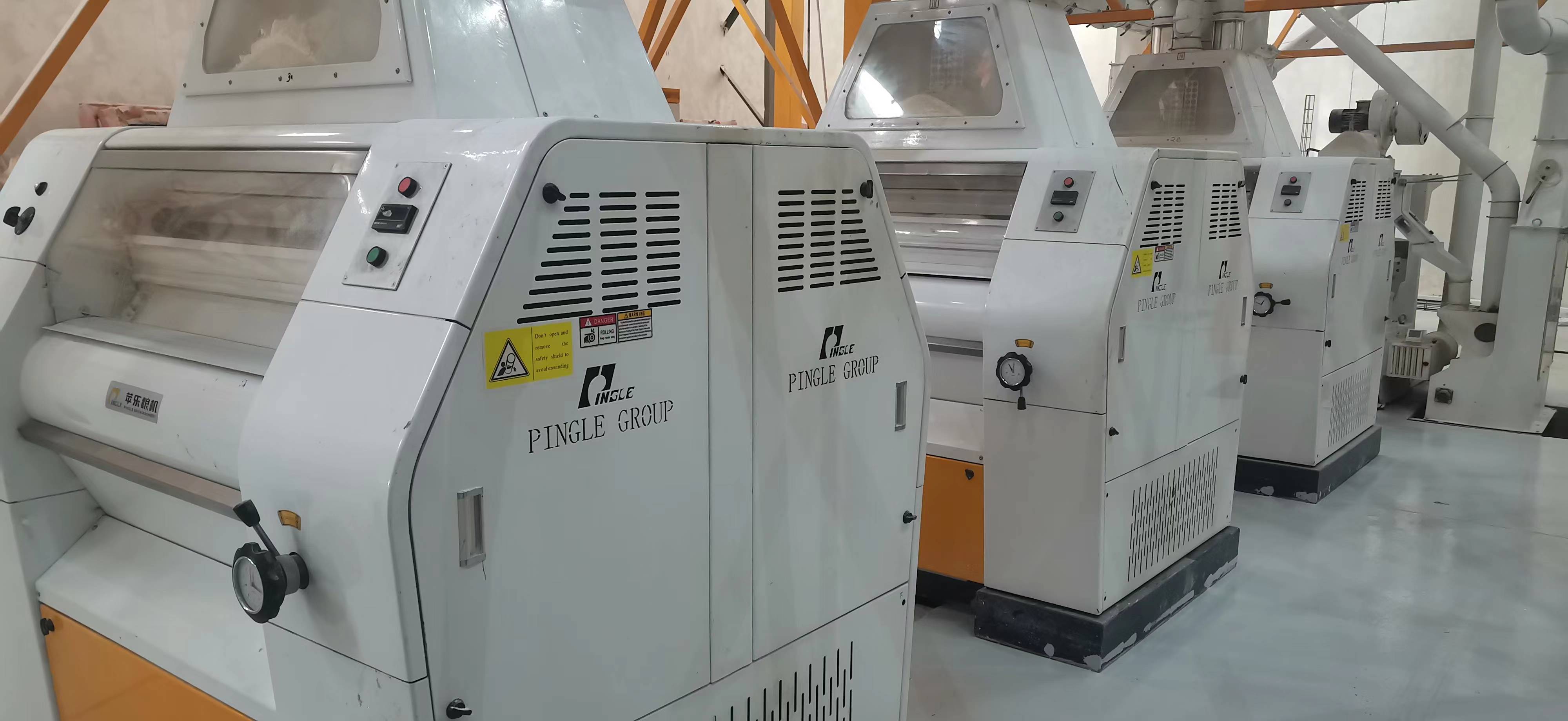
The journey begins the moment grains arrive, with automated intake systems that gently guide them into initial cleaning phases. Advanced optical sorters and air classifiers work in concert to remove impurities, while moisture sensors continuously adjust conditioning parameters to achieve the perfect tempering state. Every stage flows into the next without pause, monitored by a central control system that adapts to subtle variations in raw material quality.
At the heart of the process, roller mills and sifters operate in a carefully choreographed sequence, their speeds and gaps dynamically tuned to preserve the natural characteristics of the grain. Instead of a one-size-fits-all grind, the system interprets real-time data on kernel hardness and ambient conditions, making micro-adjustments that ensure consistent particle size and minimal starch damage. The result is flour that retains its intended performance traits, whether destined for artisan breads or delicate pastries.
From milling, the flour moves through pneumatic conveying networks to storage silos, where gentle handling prevents stratification and segregation. Final blending and fortification steps are integrated directly into the flow, eliminating the need for batch interruptions. Packaging lines then take over, filling bags or totes with precision and automatically labeling them with traceable lot codes. The entire sequence, from grain intake to a palletized product, unfolds as a single, unbroken rhythm, reducing human intervention while elevating both safety and efficiency.
Tailored Solutions That Fit Every Production Scale
From compact artisanal setups to high-volume industrial lines, our machinery adapts seamlessly to your exact throughput requirements. Every component is modular and field-upgradable, so you never pay for more capacity than you need today—yet you’re always ready to grow tomorrow without replacing core equipment.
We configure line speed, dosing accuracy, and packaging formats around your specific product range—whether you’re running delicate baked goods, sticky confectionery, or frozen items. Quick-change tooling and recipe-driven controls let you switch between SKUs in minutes, preserving both efficiency and product integrity across diverse runs.
Instead of forcing a one-size-fits-all philosophy, we start with a deep assessment of your current processes and future ambitions. The result is a custom-integrated solution that fits within your floorplan, matches your utilities, and aligns with your operational skill level, delivering a sense of ownership rather than just a machine.
Pioneering Smart Technologies in Traditional Milling
The quiet hum of a mill that once relied solely on the grindstone now carries the rhythm of adaptive algorithms. Sensors tucked into century-old machinery read moisture and grain density in real time, adjusting roller gaps before the miller even notices a shift. It’s not about replacing tradition, but weaving digital awareness into the fabric of a craft built on touch and sound.
On the floor, tablets display heat maps of the sifting process, flagging subtle inefficiencies a human eye would miss. These tools don’t bark commands—they whisper suggestions, learning from each batch to reduce waste without stripping away the miller’s intuition. The fluted rolls still sing the same old song, but now a gentle stream of data harmonizes with it, preserving character while chasing precision.
What emerges isn’t just flour—it’s a living archive of every grain’s journey, from field to batch. This quiet integration of smart tech turns the mill itself into a storyteller, holding onto the soul of the craft while quietly turning the page. The result? Consistency that still tastes like heritage, and a process that feels less like an upgrade and more like an evolution.
Quality Assurance That Crosses International Borders
When products travel across continents, keeping quality consistent becomes a puzzle with shifting pieces. It's not just about ticking boxes at the final checkpoint; it means weaving reliability into every step, from raw material sourcing in one hemisphere to final delivery in another. The real challenge lies in making sure a product feels and performs the same way, no matter where it's unboxed, even when local regulations, climate quirks, and cultural expectations pull it in different directions.
We treat quality as a language that needs no translation, building processes that speak clearly to our teams in Shanghai, São Paulo, and Stuttgart alike. This demands a blend of standardized rigor and on-the-ground flexibility. Instead of rigid scripts, we invest in shared understanding—detailed audits, supplier partnerships that thrive on transparency, and real-time data that flags deviations before they become problems. A factory floor in Milan and a fulfillment center in Mexico City might operate worlds apart, but our quality framework gives them a common rhythm.
The results show up in small, telling moments: a stitch that holds firm after hundreds of washes, a button that clicks the same satisfying way on every unit, a scent that arrives unchanged despite ocean transit. These aren’t accidents. They come from designing quality checks that adapt to local contexts without losing their backbone, and from choosing materials that behave predictably across climates. When an inspector in Johannesburg catches a flaw that originated in a supplier’s yarn dyeing process in Vietnam, that’s when you know the system works—not because everyone followed the same checklist, but because everyone understood the same goal.
Sustainable Practices Driving the Future of Grain Processing
Grain processing is quietly undergoing a shift as mills and manufacturers adopt methods that trim waste and curb energy use without compromising throughput. Heat recovery systems now capture thermal energy once vented into the air, while water recycling loops dramatically cut consumption. These moves are far from superficial—they are rewiring cost structures and proving that leaner operations often outperform their hungrier counterparts.
Attention is turning to the streams once labeled as scrap. Spent grains, husks, and dust are finding new life as bioplastics, high-protein animal feed, and even functional food ingredients. This circular mindset transforms what was once a disposal headache into fresh revenue, embedding resilience into supply chains that used to run on linear, take-make-discard logic.
The next frontier lies in precision fermentation, enzyme engineering, and digital monitoring that fine-tunes every step from cleaning to packaging. These advances promise to phase out harsh chemicals and slashed transit dependencies, all while meeting rising demands for transparency. In an industry long shaped by convention, the early movers are not just reducing harm—they are building a nimbler, smarter foundation that will define processing for decades.
FAQ
They blend rugged engineering with smart automation at a price point that doesn't force compromises. Rather than reinventing the wheel, Chinese manufacturers have methodically refined every component—from roller mills to purifiers—using real-world feedback from dozens of countries. The result is equipment that handles high volumes with minimal downtime, even in challenging climates.
By weaving sensors and adaptive controls directly into the grain flow. Instead of treating electronics as an add-on, they've built systems where the machine self-adjusts grinding pressure and sifting speed based on humidity and grain hardness. You see fewer standalone boxes and more integrated processing lines that talk to each other, cutting energy use by up to 20% while maintaining flour consistency.
They're popping up everywhere from Ethiopian teff mills to Colombian maize processors. The common thread isn't just cost—it's adaptability. A single line can often switch between wheat, sorghum, and cassava flour within an hour, which is invaluable in regions with seasonal grain shifts. Local service teams stocked with wear parts seal the deal.
Absolutely. The same framework that strips wheat bran can be tuned for the oily challenge of soybean crushing or the abrasive nature of rice hulling. Many units ship with interchangeable screen sets and adjustable roll gaps, so a sesame paste producer and a barley mill could use nearly identical hardware, just with different presets.
It's less about replacing workers and more about giving them superhuman consistency. Touchscreen dashboards map the entire process, flagging a dull roller before it affects flour ash content. One operator can oversee multiple lines, but the real magic is in the cumulative data—the machine learns typical wear patterns and schedules its own maintenance reminders.
The gap has narrowed to the point where it's often about philosophy, not capability. You'll find SKF bearings and Siemens motors in both, but Chinese designs lean toward simpler serviceability—fewer specialized tools needed. For a mill in rural Zambia, that pragmatic approach often translates to longer actual uptime than a more delicately tuned import.
You can start with a container-sized unit that processes two tons daily and bolt on identical modules as demand grows. It's not just scaling up; manufacturers will adapt hopper shapes to your local grain characteristics or split a single purifier into three streams if your market demands extra-fine cake flour and coarse semolina simultaneously.
Video-guided repairs have become standard, but the better firms station engineers regionally—someone who knows your specific machine can be at your door within 48 hours in most of Africa or Southeast Asia. They also tend to stockpile wearing components at bonded warehouses abroad, so you're not waiting on a container from Shanghai during peak harvest season.
Conclusion
China’s flour milling machines have reshaped the way grain is processed, blending precision mechanics with fully automated workflows that take wheat from intake to packaged flour with minimal human intervention. The designs prioritize consistent particle size and high extraction rates, meeting the strict demands of bakeries and food manufacturers worldwide. Whether for a community mill or a sprawling industrial complex, these systems adapt through modular configurations and flexible capacity options, ensuring that producers pay only for what they truly need.
Beyond mechanical reliability, intelligent sensors and data-driven controls are being embedded into traditional milling lines, enabling real-time adjustments that preserve flour quality and reduce downtime. Stringent testing protocols, aligned with global food safety standards, guarantee that every shipment meets import requirements across continents. At the same time, energy-efficient motors, waste-heat recovery, and dust-free operation underline a commitment to greener production, positioning these machines as a forward-looking choice in an industry increasingly shaped by environmental awareness.
Contact Us
Contact Person: Jiakuo Wu
Email: [email protected]
Tel/WhatsApp: +86-13011566087
Website: https://www.pinglemachine.com